

Libyan Youth Rally Around Prince Mohammed el-Senussi, Backing Constitutional Monarchy as the Only Path Forward for Libya
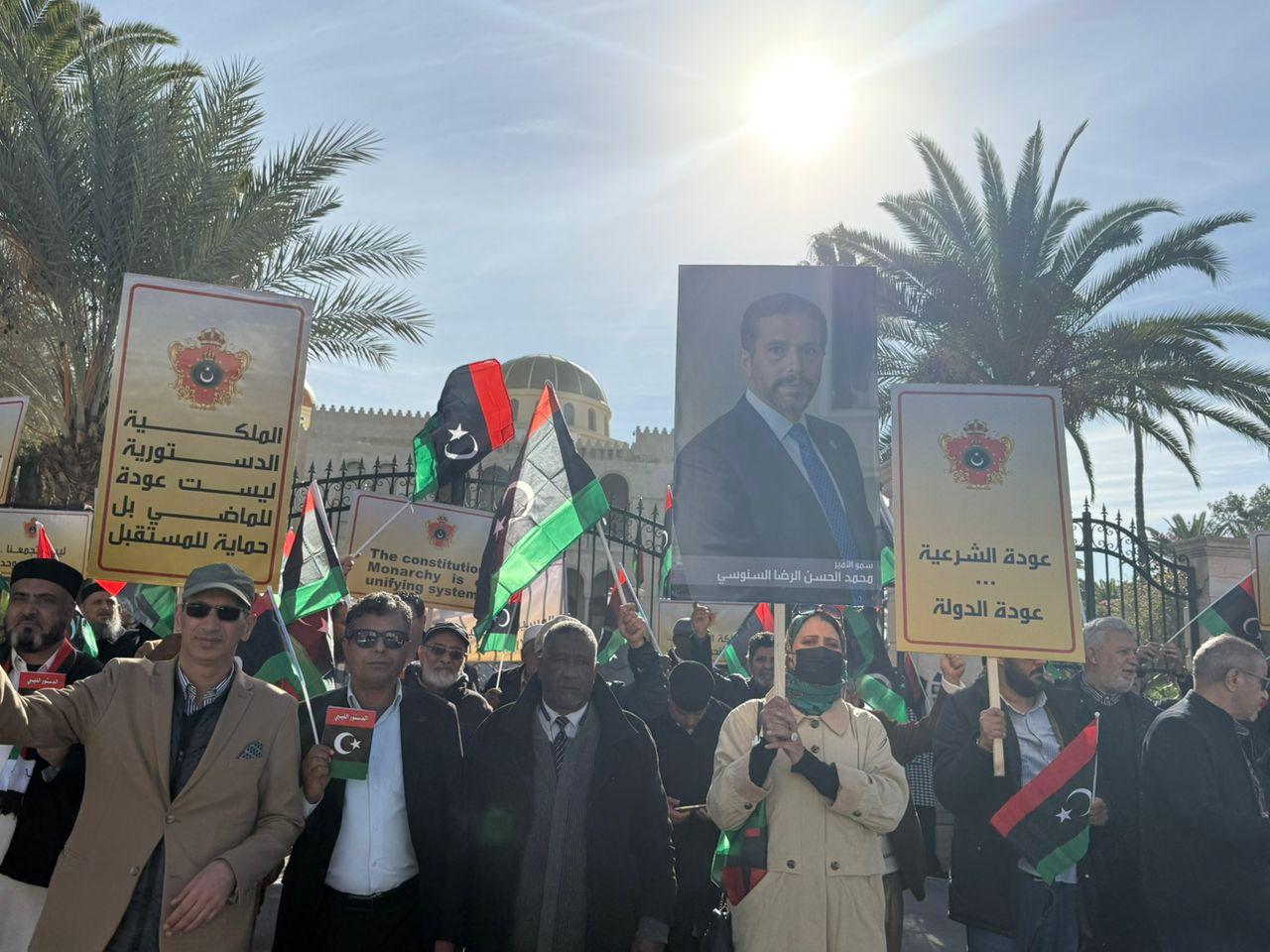
Libyans rally around HRH Mohammed El-Senussi and the constitutional monarchy in a march that took place in Tripoli on January 3rd
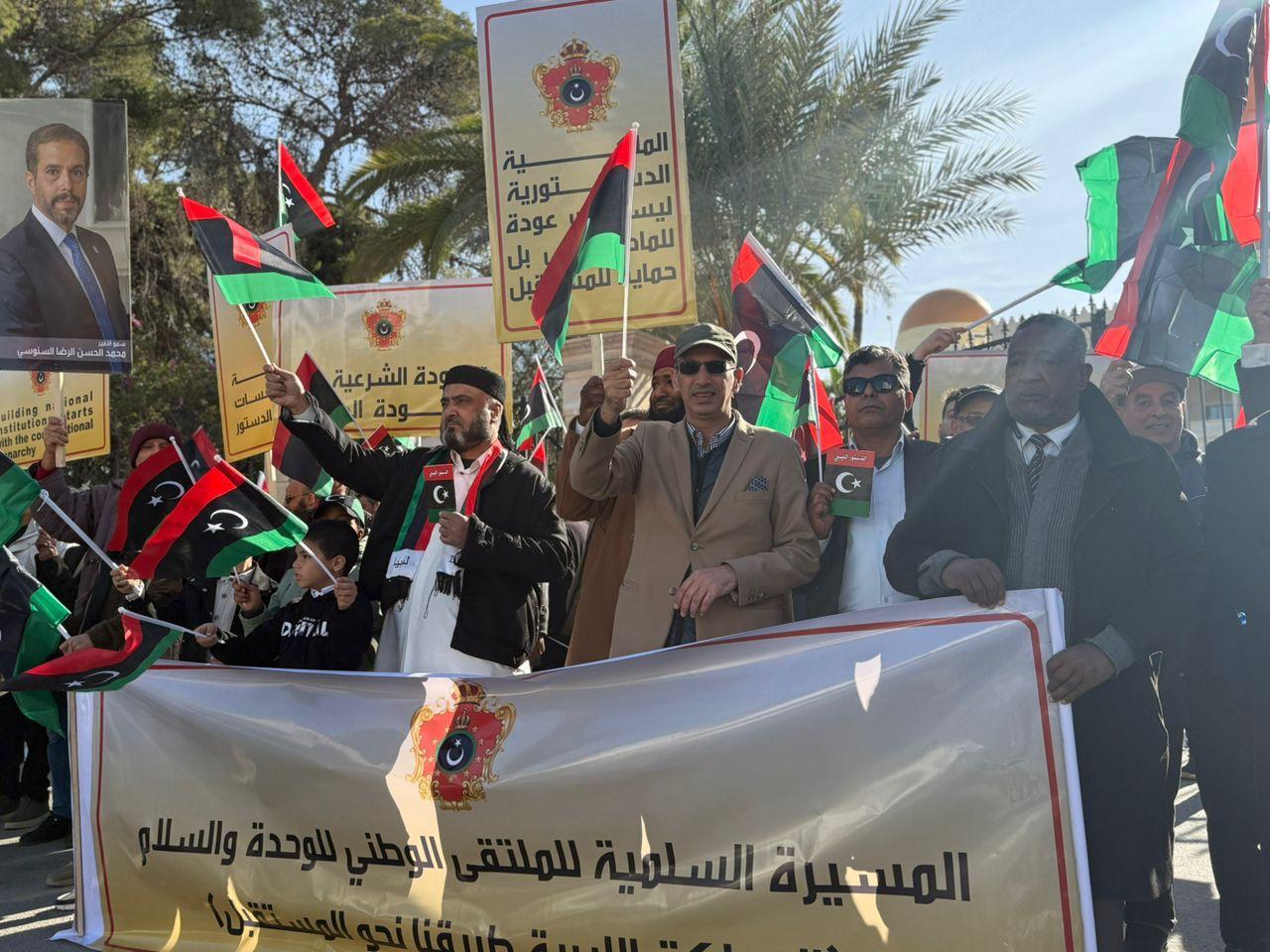
Libyans rally around HRH Mohammed El-Senussi and the constitutional monarchy in a march that took place in Tripoli on January 3rd
Libyan youth rally around HRH Mohammed el-Senussi, backing a return to the 1951 constitutional monarchy amid growing frustration with political exclusion.
LONDON, UNITED KINGDOM, January 3, 2026 /EINPresswire.com/ -- Libya’s Independence Day this year was followed by a significant public mobilisation, as young Libyans sought to take to the streets in response to a national address delivered by Crown Prince Mohammed El Senussi on 29 December, calling for unity, constitutional legitimacy, and peaceful civic engagement.The march, which took place on January 3rd, was organised by youth groups and civil society networks, and came shortly after the Crown Prince’s Independence Day address. In his remarks, he urged Libyans—particularly younger generations—to commit to a Libyan-led solution rooted in constitutional principles and national cohesion. Participants intended to carry banners referencing national unity, the 1951 Independence Constitution, and the constitutional monarchy it established.
However, the public expression of this support took place under constraints imposed by the authorities. Organisers warned that efforts to silence or narrowly confine peaceful expressions of political support run directly counter to Libya’s stated commitments to dialogue, inclusion, and national reconciliation.
Organisers said the demonstration reflected a growing conviction among young Libyans that previous political pathways have been exhausted, and that a return to Libya’s original constitutional framework represents the most credible route toward national unity, stability, and renewal. They further emphasised that suppressing visible support for constitutional legitimacy does not diminish that support, but instead exposes the widening gap between public sentiment and the space permitted for its expression.
The march followed a series of major civic gatherings held in recent weeks. On 15 November, nearly one thousand Libyans convened in Tripoli for the National Meeting for Unity and Peace, one of the largest civic assemblies in years focused on constitutional legitimacy. This was followed by a national women’s conference on 22 November and a youth conference on 4 December, where participants openly endorsed the 1951 Constitution and the constitutional monarchy as a unifying national framework.
Taken together, these events represent a sustained national mobilisation rather than a single moment of protest. Youth organisers said the Independence Day march was intended to publicly affirm what has already become clear in forums across the country: a generation raised amid instability, factionalism, corruption, and economic exclusion no longer accepts being denied a voice while decisions about its future are taken behind closed doors.
In his Independence Day address, the Crown Prince emphasised that Libya’s founding constitutional order emerged under difficult conditions yet succeeded in establishing a functioning state based on law and national institutions. He praised the recent civic gatherings and highlighted the role of young Libyans in shaping a peaceful and inclusive national future.
He also called on citizens to raise their voices peacefully and collectively so that the international community could recognise the restoration of the 1951 Independence Constitution as a genuine national demand—not an elite project. Participants in the youth mobilisation said the restrictions placed on their march stood in stark contrast to that call, reinforcing concerns about the shrinking space for lawful political expression.
Many of those who sought to participate were born decades after the monarchy was abolished and have no personal memory of that period. Yet they argue that the constitutional framework of 1951—which established a parliamentary democracy with a constitutional monarch as head of state—remains Libya’s only viable unifying legal foundation.
Drafted under United Nations supervision and adopted at independence, the 1951 Constitution created representative institutions, enshrined the separation of powers, and guaranteed civil and political rights. It also granted women political rights earlier than several European countries, including Switzerland, and provided protections for religious and ethnic minorities. Supporters cite this record as evidence of its enduring relevance.
Legal experts, including constitutional scholars consulted in the United States, note that the 1951 Constitution was never formally abolished through a lawful national process. Though suspended following the 1969 coup, it was never replaced by a constitution adopted through legitimate legal procedures, reinforcing arguments that it remains Libya’s only valid constitutional reference point.
“Young Libyans are not calling for something new or experimental,” said Ahmed Bayoud, a youth organiser involved in the mobilisation. “We are calling for the restoration of a constitutional order that once worked—one that united the country rather than fragmenting it, protected rights, and placed the rule of law above political bargaining.”
Another youth organiser, Ahmed Nbia, emphasised that support for Crown Prince Mohammed El Senussi is inseparable from support for the constitutional framework itself. “The monarchy is not about personal rule,” he said. “It exists to safeguard the constitution. The monarch stands above political competition so institutions can function. Silencing public support for this framework only deepens the crisis it is meant to resolve.”
Organisers also pointed to international precedents, including Spain’s restoration of its constitutional monarchy in 1975 and Latvia’s reinstatement of its pre-Soviet constitution in 1990, as examples of how constitutional continuity can help societies recover legitimacy after periods of upheaval.
The mobilisation reflects broader demographic realities. According to United Nations data, more than half of Libya’s population is under the age of 30. Many young Libyans face high unemployment, declining public services, and limited economic prospects—conditions that make the suppression of peaceful political expression particularly damaging.
Organisers stressed that the youth march was not intended as a confrontation, but as a lawful assertion of civic responsibility. They warned, however, that continued efforts to restrict or mute such expressions risk further alienating a generation that is asking not for power, but for legitimacy, inclusion, and a future governed by law.
Further civic activities are expected in the coming weeks as youth and civil society groups continue to build on the momentum generated by the Independence Day address and the series of national meetings.
Mr Ahmed Saleh
Preparing Committee National Meeting for Unity and Peace
email us here
Legal Disclaimer:
EIN Presswire provides this news content "as is" without warranty of any kind. We do not accept any responsibility or liability for the accuracy, content, images, videos, licenses, completeness, legality, or reliability of the information contained in this article. If you have any complaints or copyright issues related to this article, kindly contact the author above.
